Villisca Axe Murders

coldUSJune 9, 1912 — June 10, 1912

0 verified · 4 unverified · 4 claims total

On the evening of Sunday, June 9, 1912, the Moore family of Villisca, Iowa walked home from a church children's program with eight people in their party and no reason to expect what was coming. Josiah Moore, 43, was a well-regarded businessman and deacon—a man with standing in this quiet Montgomery County town. His wife Sarah, 39, walked beside him. Their four children came along: Herman, 11; Mary Katherine, 10; Arthur, 7; and Paul, just five years old. Joining them for a sleepover were two sisters from the neighborhood: Ina May Stillinger, eight, and her sister Lena Gertrude, eleven, who had been invited by Mary Katherine to spend the night. The program had wrapped up around 9:30. By 9:45 or 10 o'clock that evening, all eight of them were inside the two-story frame house on East Second Street, doors closed against the summer dark.

None of them survived until morning.

The discovery came at approximately seven o'clock on June 10. Mary Peckham, the family's neighbor, had grown uneasy. The Moores were reliable people—up early, chores done, a household that ran on schedule. But that morning, nobody appeared. No sounds from the yard, no movement in the windows. Peckham alerted the town marshal, Henry Horton, who entered the home and moved from room to room. When Horton emerged, he reportedly told a Moore relative what he had found in plain terms: "Somebody was murdered in every bed."

Every victim had been bludgeoned to death while sleeping. All eight showed severe head wounds. The murder weapon was Josiah Moore's own axe—retrieved from somewhere in the house and used on each person in turn, methodically, without waking any of the others. Afterward, the killer left it in the downstairs guest room where the Stillinger girls had been sleeping. The investigation would note other details that compounded the horror: mirrors covered with clothing, curtains drawn, the house locked from within. Someone had moved through the home carefully, perhaps even lingered after the killings. The attack on eight people without a single survivor roused or able to call out suggested either extraordinary luck or deliberate knowledge of the household's layout.

The 1912 investigation was shaped and constrained by the tools available to it. There were no reliable forensic techniques, no criminal databases, no way to anchor physical evidence to a suspect with scientific certainty. What arrived in Villisca instead was an overwhelming wave of outside attention: journalists, privately hired detectives working for competing parties, state investigators, and amateur sleuths, all working the case at the same time and often at cross-purposes. Grand juries convened. Accusations circulated. A slander lawsuit grew out of the investigation itself. The case generated more proceedings than it did clarity.

Suspicion eventually focused on a traveling minister named Reverend George Kelly. Kelly was tried twice for the murders. The second trial ended in acquittal. The most durable theory among historians centers on a different man: Henry Lee Moore, an itinerant laborer with no relation to the slain family. In the months after Villisca, Moore was convicted of axe-murdering his own mother and grandmother in a separate case—the similarity in method striking enough to keep his name central to discussion of the Villisca case for decades. But no physical evidence has ever placed him at the Moore house on the night of June 9, and he was never charged.

Without a conviction, the case eventually receded. Legal proceedings wound down through the 1920s. The story settled into local memory, then into the wider archive of American unsolved crime.

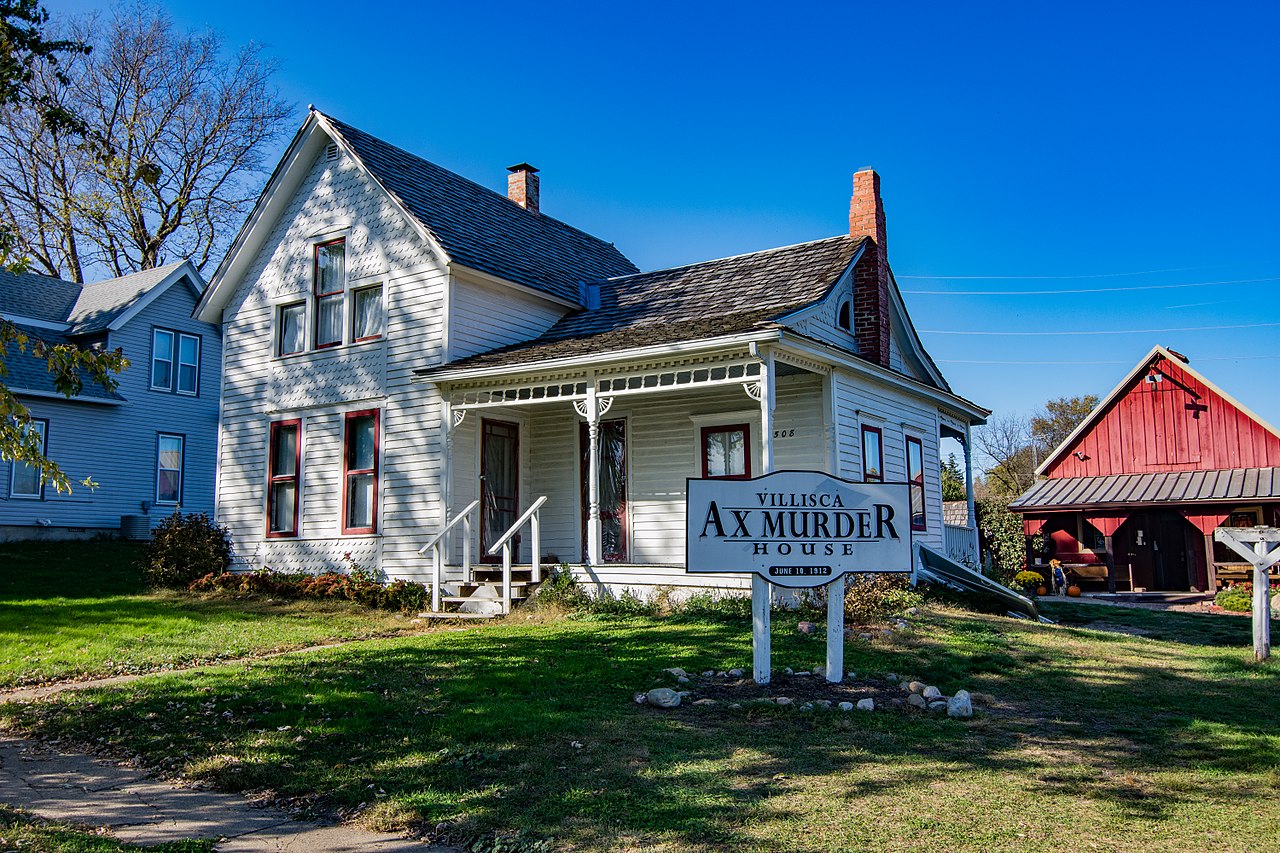
The Moore residence still stands. Restored in the 1990s and listed on the National Register of Historic Places, it operates today as the Villisca Axe Murder House—open for tours and overnight stays, a destination for true crime researchers and those drawn to the particular gravity of a case with no answer. Modern forensic methods have been discussed as a potential avenue: DNA analysis, investigative genetic genealogy, the same techniques that have cracked other century-old cold cases. No conclusive physical evidence known to originate from the perpetrator has been confirmed to survive.

What happened after the Moore family arrived home from church on the night of June 9, 1912, has never been answered in a courtroom. Josiah and Sarah Moore. Herman, Mary Katherine, Arthur, and Paul. Ina May and Lena Gertrude Stillinger. The murders are documented. The person responsible is not.

Images

Archival and public-source images gathered for this case, shown as found and marked unverified until a human checks rights and relevance. Not a rights clearance, endorsement, or complete record.

The Moore family home in Villisca, Iowa, now known as the Villisca Axe Murder Houseunverified
The Moore residence on East Second Street in Villisca, Iowa, where eight people were murdered on the night of June 9, 1912. The house was restored in the 1990s and is listed on the National Register of Historic Places. Photographed October 2016.Josiah B. and Sara Moore House, Villisca, Iowa (NRHP) — via Wikimedia Commons

Timeline

  1. c. June 9, 1912Moore family and Stillinger sisters attend church program, return home between 9:45 and 10 p.m.

    Moore family and Stillinger sisters attend church program, return home between 9:45 and 10 p.m.

  2. c. June 10, 1912Eight people bludgeoned to death in their beds overnight

    Eight people bludgeoned to death in their beds overnight

  3. c. June 10, 1912Neighbor Mary Peckham notices family has not emerged; alerts Marshal Horton

    Neighbor Mary Peckham notices family has not emerged; alerts Marshal Horton

  4. c. June 10, 1912Marshal Horton enters the Moore home and discovers all eight victims dead

    Marshal Horton enters the Moore home and discovers all eight victims dead

Claims

Each claim is sourced and shown by default. The mark beside it reads its status — a hollow ring with the count of independent sources (reported, awaiting review), a solid dot (human-verified), or oxblood (disputed). Verification is human-only.

0 of 4 facts verified · help verify →

Henry Lee Moore — unrelated to the slain Moore family — was later convicted of the axe murders of his own mother and grandmother in a separate case occurring several months after the Villisca killings, leading some investigators to suspect a connection.[1, 2]

origin: imported

Reverend George Kelly was the only person ever tried for the Villisca murders; his first trial ended in a hung jury and the second in an acquittal.[1, 3]

origin: imported

The murder weapon was an axe belonging to Josiah Moore; it was found in the guest room where the Stillinger sisters had been sleeping.[1, 4]

origin: imported

Each of the eight victims was attacked while sleeping, with multiple blows delivered to their heads.[1, 3]

origin: imported

Sources

Sources opened and checked for this issue — not exhaustive, official, or a complete record. Numbers match the citation marks above.

  1. 1.Wikipedia — Villisca axe murders
  2. 2.Annals of Iowa / University of Iowa — The Villisca Axe Murders: A Review Essay
  3. 3.Iowa Cold Cases — The Villisca Axe Murders
  4. 4.The Villisca Axe Murder House — Historical information and case details