By the spring of 1937, American industry was at the center of a fundamental confrontation over whether industrial workers would have the right to organize. The Congress of Industrial Organizations, known as the CIO, had won a landmark agreement from United States Steel earlier that year, securing union representation and better conditions for thousands of workers. But the smaller steel companies — collectively known as Little Steel — refused to follow suit. Republic Steel, formed in 1935 by a consortium of smaller producers, was among the most resistant. Workers at Republic Steel's mills, frustrated by the company's refusal to match the terms U.S. Steel had accepted, voted to join the Steel Workers Organizing Committee, the CIO's labor arm, and began pressing for recognition. The company responded with layoffs, surveillance of suspected union supporters, and the deployment of private security forces.
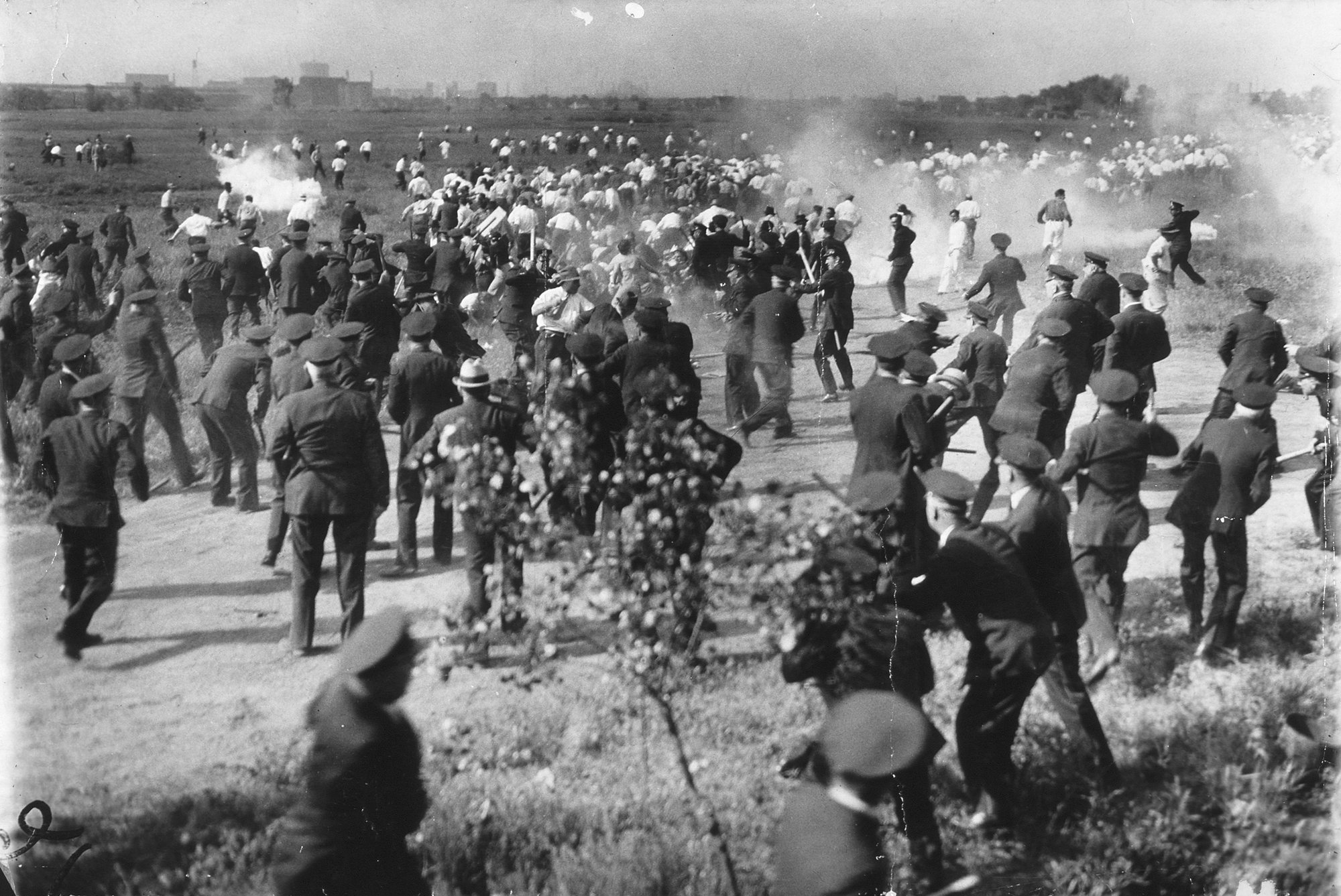
The strike that followed lasted months. By late May 1937, picketing had become a daily presence at Republic Steel's South Chicago plant. On Memorial Day — May 30 — the union organized a larger demonstration and picnic, drawing workers and their families to the site. Contemporary reports and later La Follette Committee investigations placed the crowd at between 1,500 and 2,500 people. They gathered near the Republic Steel plant and began a procession toward the facility's main gate. The event was peaceful in its early stages; marchers carried American flags and signs supporting union recognition.
Approximately 264 Chicago Police officers were already on scene. The officers moved to block the procession, and the confrontation escalated quickly. Police cut through the crowd and opened fire without warning. Ten workers were killed — four died at the scene, and six more died later from their injuries. More than ninety workers were wounded and taken to the hospital; nine were left permanently disabled by beatings. The violence was witnessed and later documented by Dorothy Day, the labor activist and journalist, whose reporting brought additional attention to what had occurred. Newsreel footage of the confrontation was filmed but later suppressed by Paramount, limiting its public distribution.

