Cases
Loading cases…
Loading cases…
2 casesclear filters
On the morning of June 6, 1968, at 8:44 a.m., Robert Francis Kennedy was pronounced dead at Good Samaritan Hospital in Los Angeles. He was 42 years old. The nation had spent the night in vigil, watching the wire reports, hoping against the news that was already all but written. Hours earlier, in the kitchen corridor of the Ambassador Hotel, a 24-year-old Palestinian-American named Sirhan Sirhan had raised a .22-caliber revolver and fired. Four others were wounded. Kennedy never regained consciousness. The thirty-six hours between that hallway and the hospital declaration compressed something enormous — the presidential campaign, the years of grief after Dallas, an entire season of national violence — into one more unbearable loss. The night before had seemed like the beginning of something. Kennedy had spent June 4 watching the California Democratic primary returns. When the numbers came in and the crowds swelled in the Embassy Ballroom of the Ambassador Hotel, he stepped to the microphone and thanked his supporters — the farmworkers, the students, the civil-rights organizers who had made the California win possible. He spoke of closing the divisions that had split the country over Vietnam and poverty and race. Then the speech ended, the lights held, and Kennedy moved toward the kitchen to make his exit through the back of the hotel — an area that lacked the security presence of the main ballroom. At 12:15 a.m. on June 5, Sirhan opened fire. Hotel staff and former NFL player Rosey Grier tackled Sirhan and pinned his gun arm, but the damage was done. Kennedy lay on the concrete floor of the pantry, his head cradled by a busboy. The crowd in the ballroom, seconds earlier jubilant, did not yet know what had happened. Sirhan Sirhan had grown up in the Los Angeles area after immigrating from Mandatory Palestine with his family as a child. Investigators would later describe him as consumed by anger over Kennedy's stated support for Israel during the Six-Day War of 1967 — a position Sirhan had tracked in his journals. A handwritten notebook recovered from his home expressed hostility toward Kennedy in terms that prosecutors would cite as evidence of premeditation. Multiple psychiatric evaluations identified paranoid ideation, but the court ultimately found him fit to stand trial. The LAPD investigation concluded he had acted alone. The trial that followed was a landmark in American legal spectacle. Artist Arnold Mesches attended the proceedings and produced courtroom sketches that were transmitted to newspapers and television stations across the country — one of the earliest cases in which courtroom illustration served as the nation's primary window into a proceeding no camera could enter. Those sketches now reside in the Library of Congress exhibition "Drawing Justice: The Art of Courtroom Illustration," a visual record of how the public watched justice unfold in an era before cameras were permitted inside courtrooms. On March 3, 1969, the jury found Sirhan guilty and sentenced him to death by lethal gas. That sentence never carried out. In 1972, the California Supreme Court ruled in People v. Sirhan that the state's death-penalty statutes were unconstitutional, a decision that commuted not only Sirhan's sentence but those of every inmate then on California's death row. Sirhan became a lifer. The state reinstated capital punishment in 1978, but Sirhan's commuted sentence was not revisited. He has remained incarcerated ever since, transferred across several California facilities, most recently housed at the Richard J. Donovan Correctional Facility in San Diego County. Over the following decades, parole hearings became a ritual of denial. The board has rejected his release fifteen times, with the most recent refusal recorded in 2016. At each hearing, the board weighed rehabilitation, mental-health treatment, and the nature of the original crime — and each time concluded that the deliberate assassination of a United States senator and presidential candidate placed his case beyond the threshold for release. Sirhan has now served more than 57 years. The case has never stopped generating questions. In May 2018, as the 50th anniversary of the assassination approached, Robert F. Kennedy Jr. — the senator's son — traveled to the prison to meet Sirhan. He emerged describing the encounter in terms of reconciliation, speaking about forgiveness while making clear that the parole decision rested with the board, not the family. The meeting briefly reopened a long-running public debate about whether crimes committed by a young man can follow a person to the grave. The Ambassador Hotel, where it all began, is gone. The Art Deco building that hosted Frank Sinatra and Marilyn Monroe and the Cocoanut Grove nightclub was demolished in 2005, replaced by a Los Angeles Unified School District campus. What remains is the record — the trial transcripts, the courtroom sketches, the footage of Kennedy surrounded by supporters in the seconds before he left the stage, and the date burned into the calendar: June 6, 1968, the morning that closed one of the most consequential campaigns in American political history.
4 claims
Not yet independently verified
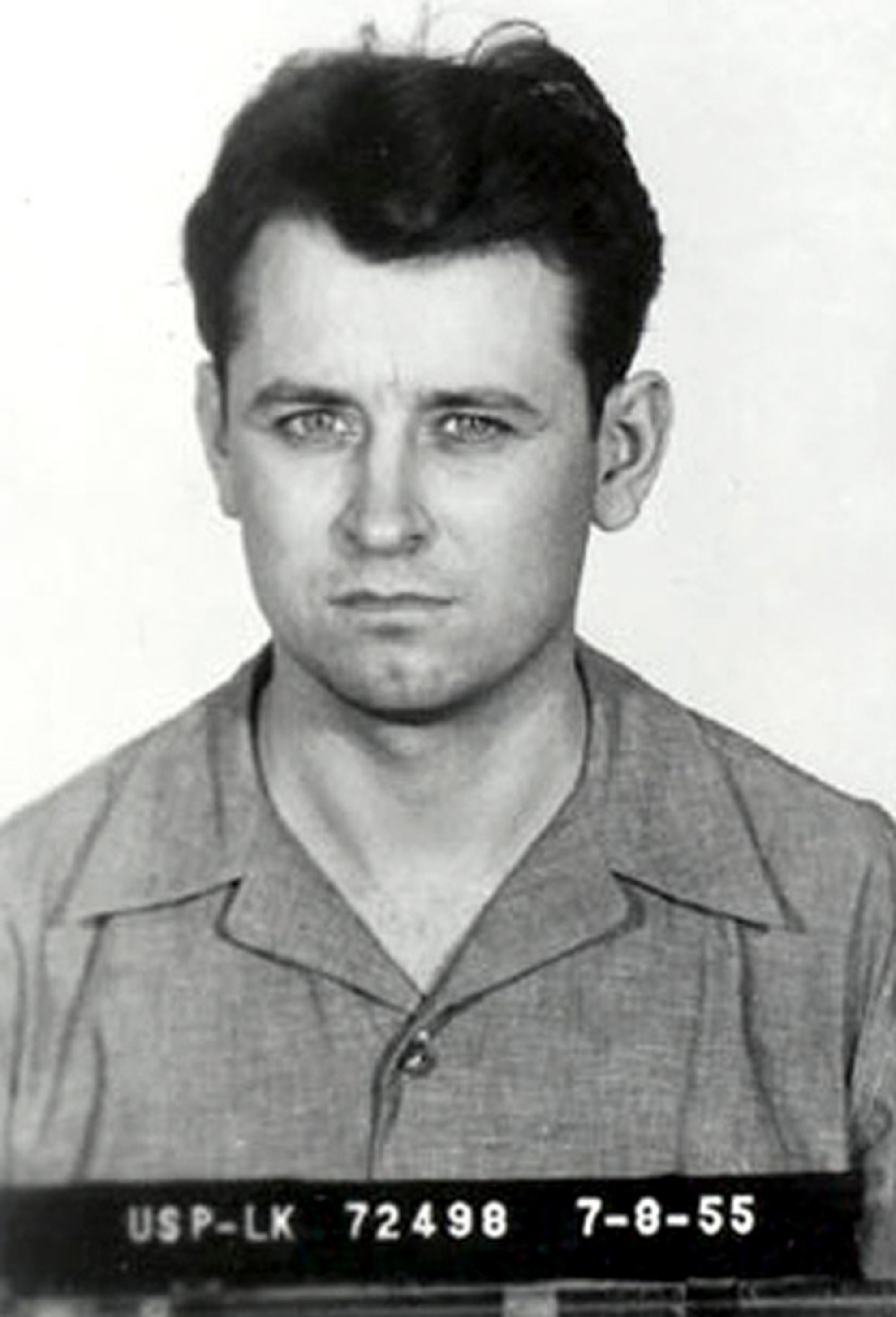
On the morning of June 8, 1968, a slight, bespectacled traveler handed a Canadian passport to an immigration officer at London's Heathrow Airport. He was booked on a flight to Brussels under the name Ramon George Sneyd. The officer asked him to step into an office "for some routine questions." The man's composure collapsed almost at once. "Oh God," he said, "I feel so trapped." In his pocket was a loaded .38-caliber revolver — and a second passport in yet another name. The traveler was James Earl Ray, and his arrest that morning closed the largest manhunt the FBI had ever conducted. Two months earlier, on April 4, 1968, Martin Luther King Jr. had been shot dead on the second-floor balcony of the Lorraine Motel in Memphis, Tennessee. The single shot was fired from the bathroom window of a rooming house across the street, where a man calling himself John Willard had taken a room hours before. Near the scene investigators recovered a bundle — a Remington rifle, binoculars, and a transistor radio — carrying a set of fingerprints. Within days the FBI matched those prints to James Earl Ray, a career criminal and escaped convict who had broken out of the Missouri State Penitentiary in 1967 while serving twenty years for armed robbery. Ray was already gone. Born in Alton, Illinois, in 1928, he had spent much of his adult life in and out of prison, and he proved an unusually capable fugitive. After the assassination he drove to Atlanta, then to Toronto, where he acquired a Canadian passport under the name Ramon George Sneyd. On May 6 he flew to London. From there he traveled to Lisbon — reportedly seeking passage to white-ruled Rhodesia or South Africa, or work as a mercenary — before returning to London on May 17. For two months his trail crossed an ocean and several countries while the FBI, Scotland Yard, and the Royal Canadian Mounted Police tried to close the net. It was a clerical detail that finally caught him. The name "Sneyd" had been placed on an RCMP watchlist, and when Ray tried to check in at Heathrow the flag came up. After his detention, Scotland Yard's Detective Chief Superintendent Tommy Butler — famous for hunting down the Great Train Robbers four years earlier — arrived to make the formal arrest. Ray was extradited to Memphis on July 19, 1968. What followed has fueled debate for more than half a century. On March 10, 1969 — his forty-first birthday — Ray pleaded guilty to King's murder, forfeiting his right to a trial, and was sentenced to ninety-nine years in prison. Within days he recanted, insisting he had been manipulated by a shadowy figure he knew only as "Raoul" and that he was a patsy in a larger conspiracy. He offered scant evidence, and no court ever granted him the trial he then spent the rest of his life demanding. In June 1977 he briefly escaped from Brushy Mountain State Penitentiary in Tennessee, remaining free for some fifty-four hours before recapture. The questions did not die with the guilty plea. In 1978 Ray testified before the House Select Committee on Assassinations, which concluded the following year that King had likely been the victim of a conspiracy, even as it identified Ray as the man who fired the shot. In a striking turn, members of the King family came to publicly support Ray's request for a trial, expressing doubt that he had acted alone. A 1999 civil suit in Memphis produced a jury verdict pointing to a conspiracy; a separate U.S. Justice Department review completed in 2000 found no reliable evidence to support those claims. James Earl Ray died on April 23, 1998, in Nashville, aged seventy, of complications from liver disease — still insisting on his innocence, still without the trial he had sought for nearly three decades. His capture at Heathrow on June 8, 1968, answered the most urgent question of that spring: who had fled the rooming house in Memphis. The questions it did not answer have outlived everyone who might once have settled them.
4 claims
Not yet independently verified