James Earl Ray: The Heathrow Capture

closedUSApril 4, 1968 — April 23, 1998

0 verified · 4 unverified · 4 claims total

On the morning of June 8, 1968, a slight, bespectacled traveler handed a Canadian passport to an immigration officer at London's Heathrow Airport. He was booked on a flight to Brussels under the name Ramon George Sneyd. The officer asked him to step into an office "for some routine questions." The man's composure collapsed almost at once. "Oh God," he said, "I feel so trapped." In his pocket was a loaded .38-caliber revolver — and a second passport in yet another name. The traveler was James Earl Ray, and his arrest that morning closed the largest manhunt the FBI had ever conducted.

Two months earlier, on April 4, 1968, Martin Luther King Jr. had been shot dead on the second-floor balcony of the Lorraine Motel in Memphis, Tennessee. The single shot was fired from the bathroom window of a rooming house across the street, where a man calling himself John Willard had taken a room hours before. Near the scene investigators recovered a bundle — a Remington rifle, binoculars, and a transistor radio — carrying a set of fingerprints. Within days the FBI matched those prints to James Earl Ray, a career criminal and escaped convict who had broken out of the Missouri State Penitentiary in 1967 while serving twenty years for armed robbery.

Ray was already gone. Born in Alton, Illinois, in 1928, he had spent much of his adult life in and out of prison, and he proved an unusually capable fugitive. After the assassination he drove to Atlanta, then to Toronto, where he acquired a Canadian passport under the name Ramon George Sneyd. On May 6 he flew to London. From there he traveled to Lisbon — reportedly seeking passage to white-ruled Rhodesia or South Africa, or work as a mercenary — before returning to London on May 17. For two months his trail crossed an ocean and several countries while the FBI, Scotland Yard, and the Royal Canadian Mounted Police tried to close the net.

It was a clerical detail that finally caught him. The name "Sneyd" had been placed on an RCMP watchlist, and when Ray tried to check in at Heathrow the flag came up. After his detention, Scotland Yard's Detective Chief Superintendent Tommy Butler — famous for hunting down the Great Train Robbers four years earlier — arrived to make the formal arrest. Ray was extradited to Memphis on July 19, 1968.

What followed has fueled debate for more than half a century. On March 10, 1969 — his forty-first birthday — Ray pleaded guilty to King's murder, forfeiting his right to a trial, and was sentenced to ninety-nine years in prison. Within days he recanted, insisting he had been manipulated by a shadowy figure he knew only as "Raoul" and that he was a patsy in a larger conspiracy. He offered scant evidence, and no court ever granted him the trial he then spent the rest of his life demanding. In June 1977 he briefly escaped from Brushy Mountain State Penitentiary in Tennessee, remaining free for some fifty-four hours before recapture.

The questions did not die with the guilty plea. In 1978 Ray testified before the House Select Committee on Assassinations, which concluded the following year that King had likely been the victim of a conspiracy, even as it identified Ray as the man who fired the shot. In a striking turn, members of the King family came to publicly support Ray's request for a trial, expressing doubt that he had acted alone. A 1999 civil suit in Memphis produced a jury verdict pointing to a conspiracy; a separate U.S. Justice Department review completed in 2000 found no reliable evidence to support those claims.

James Earl Ray died on April 23, 1998, in Nashville, aged seventy, of complications from liver disease — still insisting on his innocence, still without the trial he had sought for nearly three decades. His capture at Heathrow on June 8, 1968, answered the most urgent question of that spring: who had fled the rooming house in Memphis. The questions it did not answer have outlived everyone who might once have settled them.

Images

Archival and public-source images gathered for this case, shown as found and marked unverified until a human checks rights and relevance. Not a rights clearance, endorsement, or complete record.

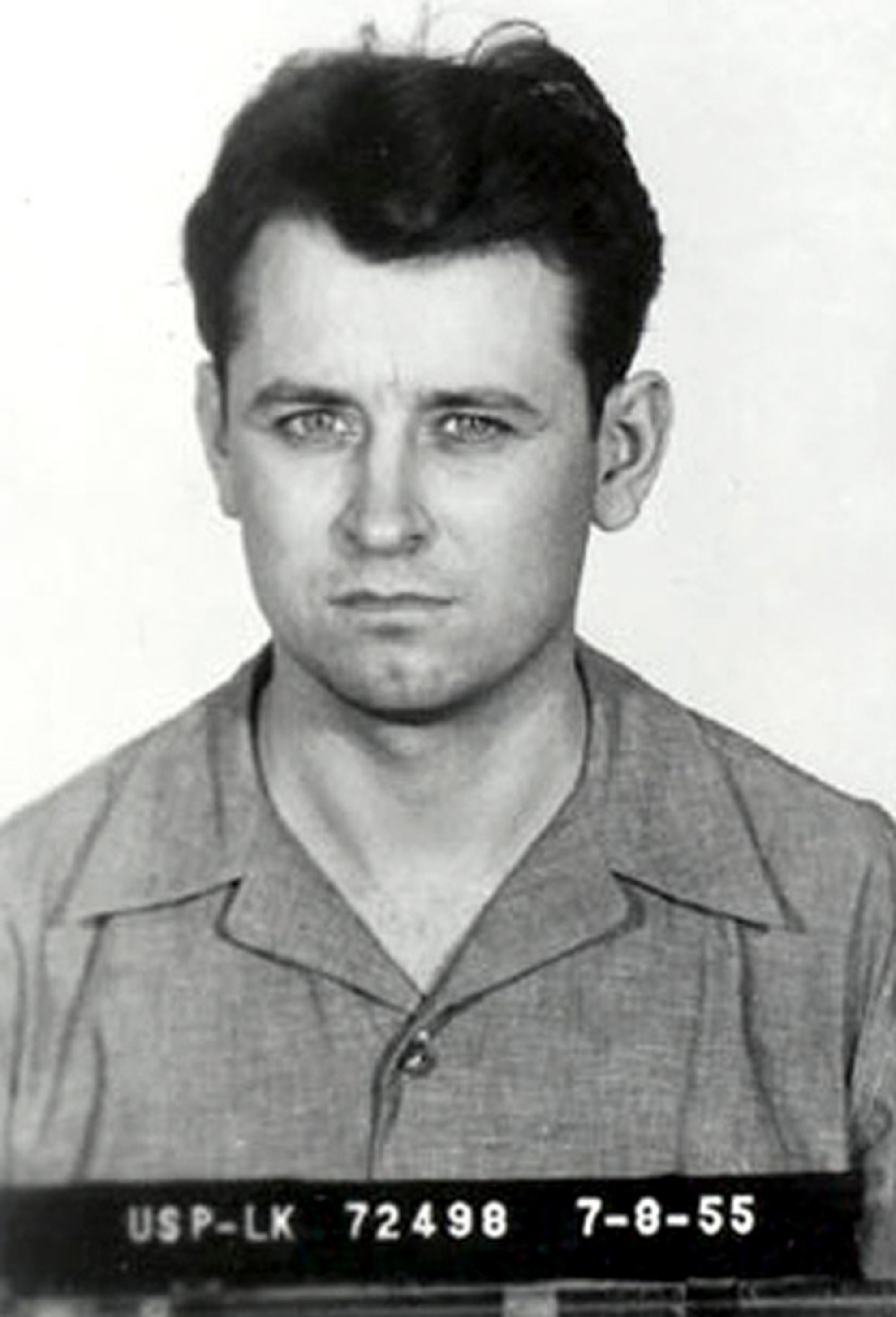
Black-and-white 1955 police booking photograph of James Earl Rayunverified
James Earl Ray in a 1955 police booking photograph, taken years before he assassinated Martin Luther King Jr. and was captured at London's Heathrow Airport on June 8, 1968.Police booking photograph of James Earl Ray (1955), via Wikimedia Commons (public domain)

Timeline

  1. April 4, 1968Martin Luther King Jr. shot dead on the balcony of the Lorraine Motel

    Martin Luther King Jr. shot dead on the balcony of the Lorraine Motel

  2. May 6, 1968Ray flew from Toronto to London under alias Ramon George Sneyd

    Ray flew from Toronto to London under alias Ramon George Sneyd

  3. May 17, 1968Ray returned to London from Lisbon after reportedly seeking passage to southern Africa

    Ray returned to London from Lisbon after reportedly seeking passage to southern Africa

  4. June 8, 1968James Earl Ray arrested at Heathrow Airport; Detective Chief Superintendent Tommy Butler makes formal arrest

    James Earl Ray arrested at Heathrow Airport; Detective Chief Superintendent Tommy Butler makes formal arrest

  5. July 19, 1968Ray extradited to Memphis

    Ray extradited to Memphis

  6. March 10, 1969Ray pleaded guilty to King's murder on his forty-first birthday and sentenced to ninety-nine years

    Ray pleaded guilty to King's murder on his forty-first birthday and sentenced to ninety-nine years

  7. April 23, 1998James Earl Ray died in Nashville of complications from liver disease

    James Earl Ray died in Nashville of complications from liver disease

Claims

Each claim is sourced and shown by default. The mark beside it reads its status — a hollow ring with the count of independent sources (reported, awaiting review), a solid dot (human-verified), or oxblood (disputed). Verification is human-only.

0 of 4 facts verified · help verify →

The RCMP placed the alias 'Ramon George Sneyd' on a watchlist; it was this flag triggering at Heathrow check-in — not physical surveillance — that led to Ray's arrest.[1, 2]

origin: imported

Near the Memphis rooming house from which King was shot, investigators recovered a bundle containing a Remington rifle, binoculars, and a transistor radio; the FBI matched fingerprints on those items to James Earl Ray within days.[2, 3]

origin: imported

The House Select Committee on Assassinations concluded in 1979 that King had likely been the victim of a conspiracy, while still identifying Ray as the man who fired the shot.[2, 3]

origin: imported

When arrested at Heathrow on June 8, 1968, Ray was carrying a loaded .38-caliber revolver and a second Canadian passport in a different alias.[1, 2]

origin: imported

Sources

Sources opened and checked for this issue — not exhaustive, official, or a complete record. Numbers match the citation marks above.

  1. 1.American Bar Association — June 8, 1968: James Earl Ray is captured
  2. 2.Encyclopaedia Britannica — James Earl Ray | Biography, Assassination of Martin Luther King, Jr., & Conspiracy Theories
  3. 3.Wikipedia — Assassination of Martin Luther King Jr.