The 1954 murder trial before Judge Edward Blythin in Cuyahoga County Common Pleas Court lasted nine weeks.[1]
Check the sourcesWikipedia ↗
origin: imported
2 claims
Not yet independently verified
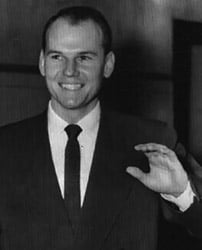
On the morning of July 4, 1954, the quiet suburb of Bay Village, Ohio, was shattered by a crime that would consume the American press, drag a physician through twelve years of imprisonment, and ultimately force the United States Supreme Court to draw a line between a free press and a fair trial. That morning, Marilyn Sheppard was found murdered in her home. Her husband, Dr. Samuel Sheppard — a well-known osteopathic surgeon — would become the prime suspect, the defendant, and, eventually, a man later acquitted after his conviction was reversed at the center of one of the most consequential criminal cases in American judicial history.
The details of the murder night were contested from the start. Sam Sheppard told investigators he had been asleep on the living room couch when he was awakened by his wife's cries. He said he grappled with a "bushy-haired intruder," was knocked unconscious, and awoke to find Marilyn dead upstairs. Investigators were skeptical. The local Bay Village police called in the Cleveland Police Department to assist. Almost immediately, official suspicion settled on Sheppard, and it would never really move.
What turned a tragic murder into a national spectacle was the Cleveland media — and, above all, the Cleveland Press. Under the aggressive editorial hand of Louis Seltzer, the Press did not merely cover the case. It campaigned. Front-page editorials demanded Sheppard's arrest. The paper alleged that the Sheppard family was conspiring to protect a killer. Television reporters set up equipment outside the courthouse. The summer news drought of 1954 meant that every development in Bay Village received saturation coverage, and that coverage painted Sheppard as guilty long before a jury was ever seated.
Each claim is sourced and shown by default. The mark beside it reads its status — a hollow ring (reported, awaiting review), a solid dot (human-verified), or an oxblood triangle (disputed). The numbered references point to the sources at the page bottom. Verification is human-only.
0 of 2 facts verified · help verify →
The 1954 murder trial before Judge Edward Blythin in Cuyahoga County Common Pleas Court lasted nine weeks.[1]
Check the sourcesWikipedia ↗
On December 21, 1954, the Cuyahoga County jury convicted Samuel Sheppard of second-degree murder rather than the originally charged first-degree murder, and he was sentenced to life in prison.[1]
Check the sourcesWikipedia ↗
Sources opened and checked for this issue — not exhaustive, official, or a complete record. Numbers match the citation marks above.
Books, podcasts, articles, and films about this case — gathered as candidates and marked unverified until reviewed. These reflect each work’s own framing, not Case Bound facts or endorsements.

Podcast · 2023unverified
#6.7: Dr. Sam Sheppard, and the Unsolved Murder of Marilyn Sheppard, Pt. II
Malpractice Podcast
Podcast · 2023unverified
#6.6: Dr. Sam Sheppard, and the Unsolved Murder of Marilyn Sheppard, Pt. I
Malpractice Podcast
Podcast · 2021unverified
Episode 44 Marilyn Reese Sheppard Murder: Dr. Sam Sheppard on Trial Part II
The Murder Book: A True Crime Podcast
Podcast · 2021unverified
Episode 42 Marilyn Reese Sheppard Murder: Dr. Sam Sheppard on Trial Part I
The Murder Book: A True Crime Podcast
Podcast · 2021unverified
Sam Sheppard, I have questions: The murder of Marilyn Sheppard
THC: Truly High Crime
Podcast · 2021unverified
Saturday Short Stack: The Murder of Marilyn Sheppard and Early Trial By Media
Killing Nostalgia