Hazel Hayes Turner was lynched on May 18, 1918, after being pulled from a chain gang[1, 2]
Check the sourcesWikipedia ↗BlackPast ↗
origin: imported
9 claims
Not yet independently verified
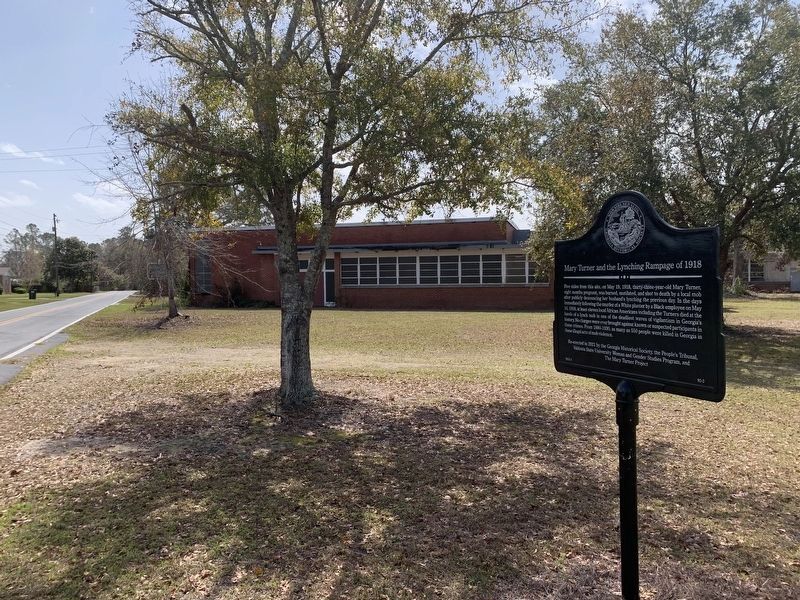
Mary Turner's name survives in the historical record because she refused to stay silent.
In the spring of 1918, Mary and her husband Hayes Turner were living and working in Brooks County, Georgia, near the plantation of a white landowner named Hampton Smith. The Turners were among hundreds of Black farm families in the area caught in a system of coercive labor that historians have characterized as "slavery by another name" — a web of debt peonage, convict leasing, and economic dependence that gave white landowners near-total control over Black workers.
When Hayes Turner threatened Smith in response to the severe beating his wife had received at Smith's hands, local authorities responded with the full weight of the all-white legal system. Hayes was arrested, convicted in a rapid proceeding, and sentenced to a chain gang. His wife, according to contemporaneous accounts, made clear she would seek accountability through the courts for his killing — an act of extraordinary courage in an era when such assertions by Black women were met with lethal retaliation.
Archival and public-source images gathered for this case, shown as found and marked unverified until a human checks rights and relevance. Not a rights clearance, endorsement, or complete record.
Each claim is sourced and shown by default. The mark beside it reads its status — a hollow ring (reported, awaiting review), a solid dot (human-verified), or an oxblood triangle (disputed). The numbered references point to the sources at the page bottom. Verification is human-only.
0 of 9 facts verified · help verify →
Hazel Hayes Turner was lynched on May 18, 1918, after being pulled from a chain gang[1, 2]
Check the sourcesWikipedia ↗BlackPast ↗
A Georgia Historical Society marker was placed near the Folsom Bridge site in 2010 and rededicated in 2021 as part of the Georgia Civil Rights Trail[3]
Check the sourcesGeorgia Historical Society ↗
Mary Turner's case was cited by NAACP officials in their push for the 1922 Dyer Anti-Lynching Bill, which passed the House but was blocked in the Senate[1, 4]
Check the sourcesZinn Education Project ↗Wikipedia ↗
Mary Turner was killed at Folsom Bridge over the Little River, approximately 16 miles north of Valdosta, Georgia[2, 3, 5]
Check the sourcesBlackPast ↗Equal Justice Initiative ↗Georgia Historical Society ↗
No one was ever convicted for the murders of Mary Turner, Hayes Turner, or the other victims of the May 1918 lynchings[1, 2]
Check the sourcesBlackPast ↗Wikipedia ↗
NAACP investigator Walter F. White documented the lynchings and published findings in The Crisis, September 1918[1]
Check the sourcesWikipedia ↗
At least 13 Black residents were killed by white mobs in Brooks and Lowndes counties in the two weeks following Hampton Smith's killing[1, 2]
Check the sourcesBlackPast ↗Wikipedia ↗
Mary Turner was 19 years old and eight months pregnant at the time of her death on May 19, 1918[2, 5]
Check the sourcesBlackPast ↗Equal Justice Initiative ↗
Mary Turner's refusal to stay silent about her husband's killing — vowing to seek warrants and court accountability — was the stated reason for her targeting by the mob[1, 5]
Check the sourcesEqual Justice Initiative ↗Wikipedia ↗
Sources opened and checked for this issue — not exhaustive, official, or a complete record. Numbers match the citation marks above.