The June 1962 Alcatraz Escape

coldUSJanuary 1, 1955 — June 12, 1962

0 verified · 4 unverified · 4 claims total

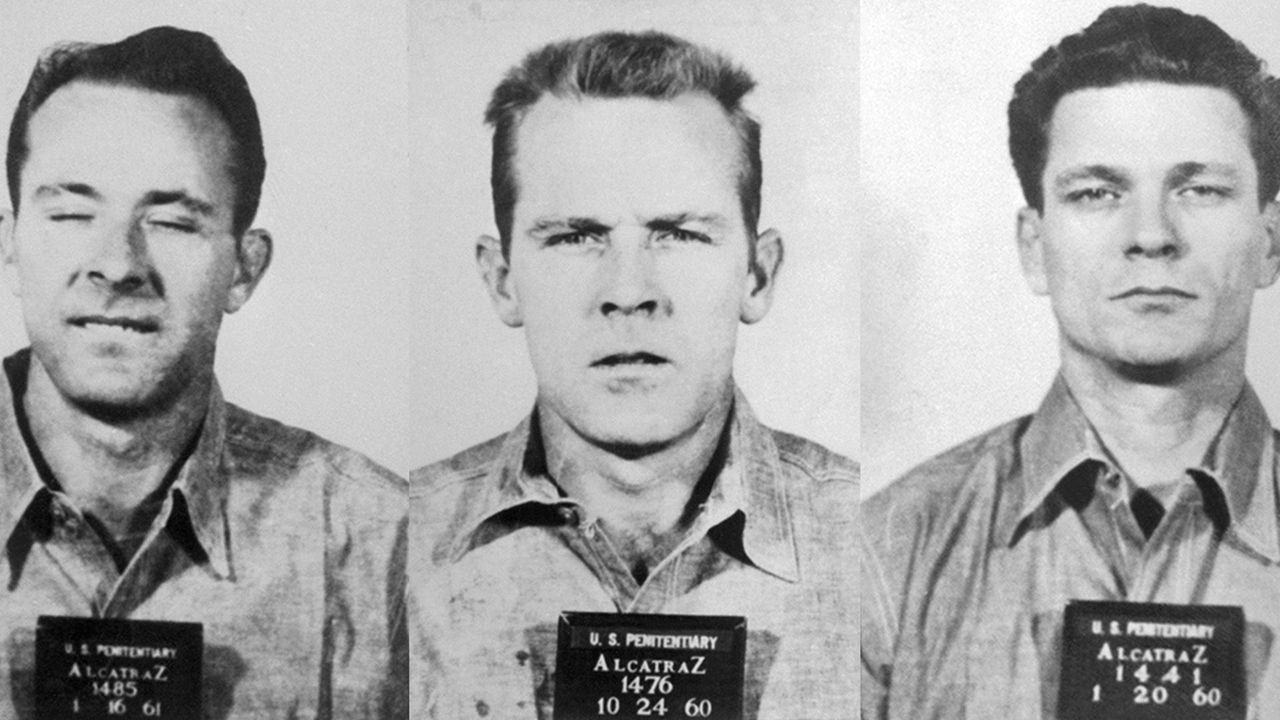
On the night of June 11, 1962, three of America's most determined prisoners quietly vanished from what was supposed to be an inescapable prison. Frank Morris and brothers John and Clarence Anglin crawled through narrow ventilation ducts in Alcatraz Federal Penitentiary, climbed to the roof, and descended to the cold waters of San Francisco Bay — becoming the only people to escape the Rock and never be definitively found.

At approximately 9:30 p.m., after guards completed their evening count, the three men set their plan into motion. Morris was the architect — a career bank robber who had been transferred to Alcatraz after failed escape attempts at other facilities. The Anglin brothers, also bank robbers, had been housed in Cell Block B alongside Morris, and over months of careful, quiet conversation, a plan had taken shape.

That plan had been eighteen months in the making. Working in near-silence after lights-out, the men used improvised tools — including a drill fashioned from a stolen electric motor — to bore through the concrete walls of their cells and widen the ventilation grates at the rear of each cell. Every morning, they concealed their work with a paste of soap and paint, leaving the walls looking intact. Meanwhile, they quietly accumulated an escape kit: roughly fifty raincoat linings sewn together into a makeshift raft, wooden paddles, and life vests stuffed with kapok cotton. Their most audacious prop was a set of dummy heads — sculpted from papier-mâché, stuffed with hair collected from the prison barbershop — left propped in their bunks to fool guards during the night counts.

A fourth conspirator, Allen West, had helped widen vents and prepare materials throughout the months of preparation. But on the night of the escape, West found that the opening in his cell wall was still too tight. While Morris and the Anglins moved through the utility corridor above Cell Block B and climbed toward the roof, West fell behind. He was still struggling to break through when the others made it topside. They did not wait for him.

The three men descended from the roof to the island's shore, inflated their raft, and pushed off into San Francisco Bay. Their intended destination was Angel Island, roughly a mile to the north — a staging point they planned to use before crossing to the mainland. The water that June night hovered in the low fifties Fahrenheit, cold enough to cause hypothermia within an hour without proper protective gear. All they had between them and the bay were an improvised raft and makeshift life vests.

At 6:00 a.m. on June 12, 1962, guards conducting the morning count reached cells B-138, B-140, and B-150. The dummy heads were convincing — for a moment. Then a guard reached out and touched one. The alarm went out immediately. FBI agents arrived within hours, and within days an exhaustive search of the bay and surrounding coastline was underway, involving the Coast Guard and federal investigators. What they found near the island's shoreline raised more questions than answers: a deflated raft, wooden paddles, and remnants of the life vests. No bodies were recovered. No confirmed sighting of any of the three men was ever documented. The investigation stretched on for seventeen years.

In 1979, the FBI officially closed its case, concluding on the basis of circumstantial evidence and expert opinion that Frank Morris, John Anglin, and Clarence Anglin had almost certainly drowned in the frigid waters of San Francisco Bay. The water temperature, the improvised equipment, and the total absence of any trace on land all pointed in the same direction. Yet the U.S. Marshals Service kept active fugitive cases on the Anglin brothers open for decades. The question of whether any of the three men survived has never been definitively settled, and the mystery has attracted researchers, filmmakers, and amateur investigators ever since.

The escape entered American legend almost immediately. The 1979 film Escape from Alcatraz, starring Clint Eastwood as Frank Morris, became the definitive popular account and introduced the story to millions of viewers. For Alcatraz itself, the escape was among the final blows to the prison's reputation: the facility closed in March 1963, less than a year after Morris and the Anglins vanished into the bay. Today the island is a National Park Service historic site visited by millions, and the cells where the men once plotted their break remain one of the most popular stops on the tour. What happened to Frank Morris, John Anglin, and Clarence Anglin after they pushed off into San Francisco Bay on the night of June 11, 1962, remains one of American criminal history's most captivating open questions.

Images

Archival and public-source images gathered for this case, shown as found and marked unverified until a human checks rights and relevance. Not a rights clearance, endorsement, or complete record.

Goga406 head exb.jpgunverified
Goga406 head exb.jpg
Alcatraz 1962 false grid.jpgunverified
Alcatraz 1962 false grid.jpg
Alcatraz Escape — Frank Morris and the Anglin Brothers — archival photounverified
Alcatraz Escape — Frank Morris and the Anglin Brothers — image 3
Alcatraz Escape — Frank Morris and the Anglin Brothers — archival photounverified
Alcatraz Escape — Frank Morris and the Anglin Brothers — image 4
Alcatraz Escape — Frank Morris and the Anglin Brothers — archival photounverified
Alcatraz Escape — Frank Morris and the Anglin Brothers — image 5

Timeline

  1. 1955John Anglin transferred to Alcatraz Federal Penitentiary

    John Anglin transferred to Alcatraz Federal Penitentiary

  2. 1956Clarence Anglin transferred to Alcatraz Federal Penitentiary

    Clarence Anglin transferred to Alcatraz Federal Penitentiary

  3. c. 1958Frank Morris transferred to Alcatraz Federal Penitentiary

    Frank Morris transferred to Alcatraz Federal Penitentiary

  4. June 11, 1962Frank Morris and the Anglin brothers escape Alcatraz using papier-mâché dummy heads, improvised tools, and a raft made from raincoat linings

    Frank Morris and the Anglin brothers escape Alcatraz using papier-mâché dummy heads, improvised tools, and a raft made from raincoat linings

  5. c. June 12, 1962Allen West found by guards during count; escape uncovered

    Allen West found by guards during count; escape uncovered

Claims

Each claim is sourced and shown by default. The mark beside it reads its status — a hollow ring with the count of independent sources (reported, awaiting review), a solid dot (human-verified), or oxblood (disputed). Verification is human-only.

0 of 4 facts verified · help verify →

Allen West participated in planning the escape but was unable to complete his passage through the utility corridor in time; he remained behind and later cooperated with investigators, providing the primary contemporaneous account of the operation.[1, 2]

origin: imported

The escapees fabricated a drill from a stolen dental mirror handle and spoons, which they used during night hours over approximately eighteen months to bore through concrete cell walls and ventilation grates.[1, 3]

origin: imported

The escapees placed papier-mâché dummy heads — fashioned to resemble sleeping inmates — in their beds to deceive guards during nighttime headcounts.[1, 2, 3]

origin: imported

The escapees constructed a raft from raincoat linings to attempt the crossing of San Francisco Bay.[1, 2, 3]

origin: imported

Sources

Sources opened and checked for this issue — not exhaustive, official, or a complete record. Numbers match the citation marks above.

  1. 1.Wikipedia — June 1962 Alcatraz escape
  2. 2.Federal Bureau of Investigation — Alcatraz Escape Investigation Final Report
  3. 3.PBS Secrets of the Dead — The June 1962 Alcatraz Escape