Cases
Loading cases…
Loading cases…
2 casesclear filters
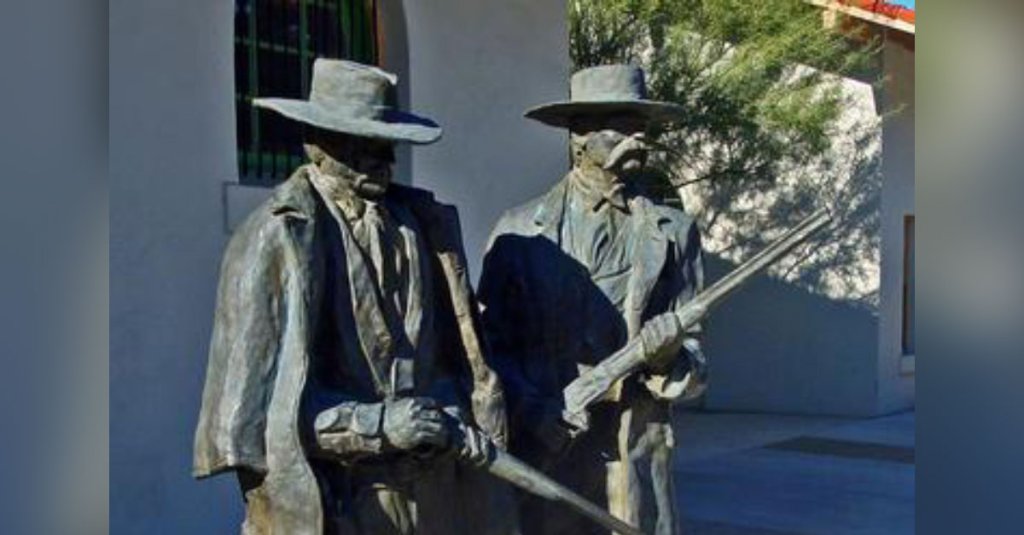
On the night of July 19, 1879, a man named Mike Gordon was shot in Las Vegas, New Mexico. He survived until the following morning, when his wounds killed him. Charges were filed. Then they were dismissed. The official record closed without naming a killer, leaving the question of who pulled the trigger permanently open — or so the documents suggest. Legend, however, has never had much patience for open questions. The popular account of that night goes like this: Gordon had shot up a saloon in Las Vegas where Doc Holliday was working the gambling tables. Holliday, a man who had already earned a reputation for violence in the frontier West, stepped outside and shot Gordon. First kill. First entry in a ledger that would continue to grow until tuberculosis finally claimed him in Glenwood Springs, Colorado. The legend is clean, causal, and satisfying. It also lacks any foundation in the historical record. Historians who have examined the primary documentation of the Gordon killing have found nothing that connects Holliday to the shooting. One analysis states it plainly: "Legend says that Doc Holliday was the man who took out Gordon, in what would be the dentist's first killing. There's no evidence of that." The saloon story — Gordon provoking Holliday, Holliday responding with lethal force — appears to be embellishment layered onto a biographical gap rather than a recovered fact. John Henry Holliday was born August 14, 1851, and completed training as a dentist before tuberculosis ended that career. The disease had already claimed his mother; it would pursue Holliday for the rest of his life. Seeking relief from the damp air of the South and increasingly cut off from the professional life he had prepared for, Holliday gravitated toward the frontier gambling scene, where a sharp mind, a steady hand, and a tolerance for confrontation were the relevant qualifications. By 1879, he had connected with Wyatt Earp and settled in Las Vegas, New Mexico, a raw trading town on the Santa Fe Trail where the institutions of law were still very much under construction. Las Vegas was a waypoint, not a destination. Holliday would soon move on to Prescott, Arizona, and then to Tombstone — where history, in the form of the Gunfight at the O.K. Corral, would finally catch up with him in a way that left a documented record. His presence in Las Vegas in 1879 is confirmed. What he did there — whether he killed Mike Gordon or anyone else — is not. The absence of documentation is a structural feature of this period, not an accident. Towns like Las Vegas in the 1870s had limited and inconsistent record-keeping, law enforcement that operated more on reputation than resources, and a population with its own reasons to stay quiet when violence occurred. The dismissal of charges in Gordon's case could reflect insufficient evidence, a reluctant witness pool, official disinterest, or any combination of these factors. The trail ends without a name attached to the killing. Into that gap, the legend stepped. Doc Holliday was a dangerous man — this much is true and documented. He was present in Las Vegas when a man was killed. It is tempting, narratively, to connect these facts. And that connection, once made in print, proved difficult to dislodge. The dime novels and newspaper features of the late 19th century were not meticulous about sourcing. By the time serious historians began examining these events, decades had passed, witnesses were dead, and the story had taken on the quality of received fact. The Holliday legend is full of these accumulations — violent incidents attributed to him that may or may not be accurate, combined with those that are well-documented, until it becomes genuinely difficult to separate the man from the myth. His role at the O.K. Corral is real, complex, and extensively documented. The number of men he actually killed in the years before that day is disputed in ways that suggest the number is simply unknown rather than settled. Mike Gordon died on the morning of July 20, 1879, of wounds received the night before. The identity of his killer is unresolved. It may have been Doc Holliday. It may have been someone whose name appears nowhere in the historical record. The legend confidently assigns the killing to Holliday. The evidence does not. That distinction — between what the legend says and what the documents show — is the recurring challenge in frontier history, and in true crime more broadly. The most dramatic story is not always the most accurate one. On this day in 1879, a man was shot in New Mexico. That is what is known. Everything else is still being sorted.
1 claim
Not yet independently verified
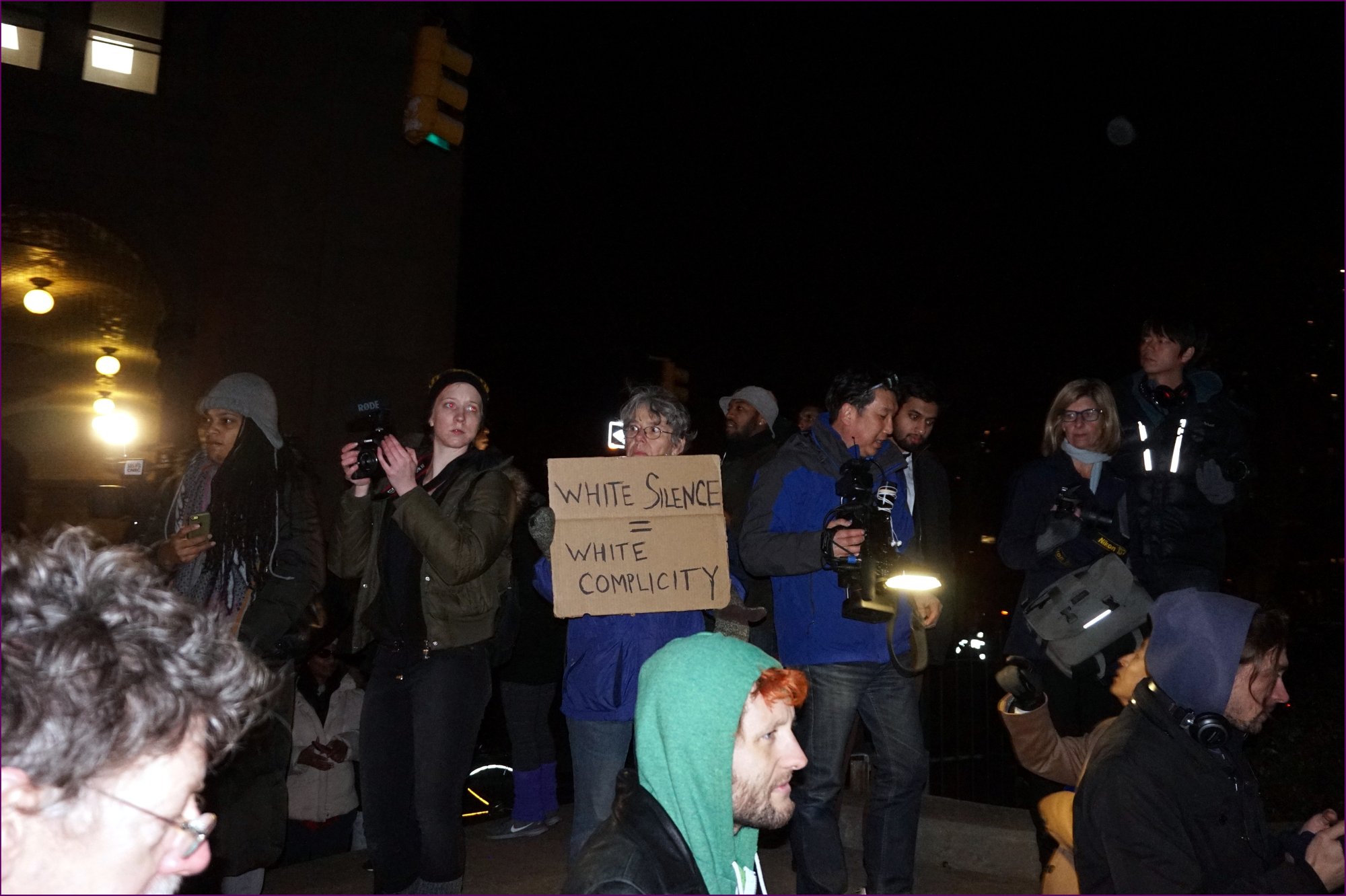
On the afternoon of July 17, 2014, Eric Garner, a 43-year-old Black man and father of six, was stopped by NYPD officers on a Staten Island sidewalk near the St. George Ferry Terminal. In his neighborhood he was known as a peacemaker — someone who broke up fights and kept things calm. Officers Daniel Pantaleo and Justin D'Amico had responded to a report about a fight; Garner had already helped defuse it. The confrontation that followed turned on allegations of illegal cigarette sales. Within minutes, Garner was dead. Pantaleo and D'Amico approached Garner about the cigarette allegations — something for which he had been stopped before, and which he denied at that moment. He told the officers he was tired of being repeatedly harassed and insisted he had not been selling anything. When they moved to arrest him, Pantaleo reached around Garner's neck from behind and applied a chokehold, a technique explicitly banned under NYPD policy. Garner was taken to the ground. As officers restrained him, he said "I can't breathe" eleven times. He lost consciousness and was pronounced dead approximately one hour later. The New York City medical examiner ruled the death a homicide, finding that the chokehold had directly contributed to it. A bystander captured the encounter on video. The footage began circulating within hours. Those eleven words ran through it — clear and repeated — and then moved through the country. "I can't breathe" was becoming something more than a description of physical distress. It was becoming a phrase that named something. The legal proceedings that followed revealed how difficult criminal accountability would be. A Richmond County grand jury was convened to consider whether Pantaleo should face charges. On December 4, 2014, the jury declined to indict him on any count. The decision sparked protests across New York and around the country and became a focal point for national debate about the prosecution of officers in deaths involving Black Americans. Civil accountability arrived on a different timeline. In July 2015, the City of New York agreed to pay the Garner family $5.9 million to settle a civil lawsuit, without any admission of wrongdoing. Internal NYPD disciplinary proceedings moved slowly: Pantaleo remained on the force for five years after the incident. In August 2019, he was terminated and stripped of his pension. He had been 29 years old at the time of the encounter, living in Eltingville, Staten Island. By the time he was fired, Garner had been dead for more than five years. The toll on Garner's family extended far beyond that sidewalk. His daughter Erica became one of the most recognized faces of the movement against police violence, leading rallies, attending court proceedings, and refusing to let the case fade. She died in December 2017 at the age of 27. The NAACP noted that the stress of the prolonged legal fight had contributed to her death. Garner's widow Esaw remained a public advocate until her own death in 2024. His mother Gwen Carr and his son Eric Garner Jr. have continued to speak on his behalf. In a 2024 interview marking ten years since his father's death, Garner Jr. said he was no longer angry at the police — a statement that carried the weight of everything that had happened in the decade between. In May 2020, George Floyd was killed by Minneapolis police officers, and he too said "I can't breathe" repeatedly as he died. The phrase connected two deaths across six years and different cities, and made it harder to dismiss what activists had argued since 2014: that the Garner case was not an isolated failure but a symptom of something structural. What had begun as eleven words on a Staten Island sidewalk had traveled into the vocabulary of a movement. Twelve years after his death, no officer was ever criminally charged in the case, the civil settlement required no admission of liability, and the officer who applied the prohibited chokehold was fired five years after the fact. What changed was the conversation — and through it, the scale of the movement that still carries his name.
1 claim
Not yet independently verified