Derek Chauvin Sentenced for the Murder of George Floyd
closed · USOn the morning of June 25, 2021, Derek Chauvin stood before Hennepin County District Court Judge Peter Cahill and heard the number that would define the rest of his life: 22.5 years. In a proceeding broadcast live to millions of viewers around the world, the former Minneapolis police officer was sentenced to 270 months in state prison for the murder of George Floyd—one of the longest sentences ever imposed on a police officer in the United States for an on-duty killing.
The road to that courtroom had begun exactly thirteen months earlier. On May 25, 2020, Minneapolis police were called to investigate a complaint, and Chauvin—a 19-year veteran of the department—arrived as one of four responding officers. What followed was captured by a bystander video that would circle the globe within hours: George Floyd, already handcuffed and lying face-down on the pavement, with Chauvin's knee pressed against his neck for approximately nine minutes and twenty-nine seconds. Floyd called out "I can't breathe" repeatedly. He called for his mother. Bystanders pleaded for Chauvin to stop. Floyd eventually went limp and was later pronounced dead.
The footage ignited protests in all fifty states and in countries around the world—one of the largest civil rights uprisings in modern American history. Within weeks, Chauvin was charged with second-degree unintentional murder, third-degree murder, and second-degree manslaughter.
The trial ran for three weeks in the spring of 2021. Jurors heard from medical experts, use-of-force specialists, and bystanders who had been present during the arrest—including a nine-year-old girl who described watching Floyd's death from the sidewalk. On April 20, 2021, the jury returned a verdict of guilty on all three counts. Given how rarely police officers face prosecution—let alone conviction—for on-duty conduct, the outcome stunned many observers who had braced for a different result.
The sentencing hearing on June 25 carried its own weight. Prosecutors sought thirty years, arguing that Chauvin had abused his authority as a sworn officer, that Floyd had been particularly vulnerable—already restrained and in distress—and that children had been present during the arrest. Minnesota's sentencing guidelines would have recommended approximately 12.5 years for a first-time offender convicted of second-degree unintentional murder. The defense asked for a sentence at the low end of that range.
Judge Cahill cited four aggravating factors in departing upward from the guidelines: Chauvin's abuse of his position as a police officer; Floyd's particular vulnerability as a restrained and distressed person in police custody; the presence of children during the arrest; and the fact that Chauvin continued his actions even as bystanders repeatedly begged him to stop. The judge also referenced a 2017 complaint in which Chauvin had used unreasonable force against a fourteen-year-old boy—a prior incident that had not resulted in criminal charges but suggested a pattern of conduct.
Chauvin addressed the court—a rare occurrence, as he had declined to testify during his trial. Members of Floyd's family delivered victim impact statements describing the grief that had reshaped their lives. The sentence: 22.5 years, with credit for time served.
The case did not end there. On December 15, 2021, Chauvin pleaded guilty in federal court to charges that he had willfully deprived George Floyd of his constitutional rights under color of law—violating Floyd's Fourth Amendment protection against unreasonable seizure and his right to medical care while in police custody. He was sentenced to 21 years in federal prison, to be served concurrently with the state sentence.
The conviction and sentence landed at the center of a national debate about what police accountability actually means. Legal analysts pointed out that the outcome—driven by overwhelming video evidence, a thorough investigation, and extraordinary public attention—demonstrated that serious prosecution of officers was possible. Critics cautioned against reading it as systemic change: most incidents of police violence lack footage clear enough to convict; most never reach a courtroom. Reforms proposed in the wake of Floyd's death—restrictions on neck restraints, requirements for officers to intervene when colleagues use excessive force, changes to qualified immunity—remained contested across state legislatures and Congress in the years that followed.
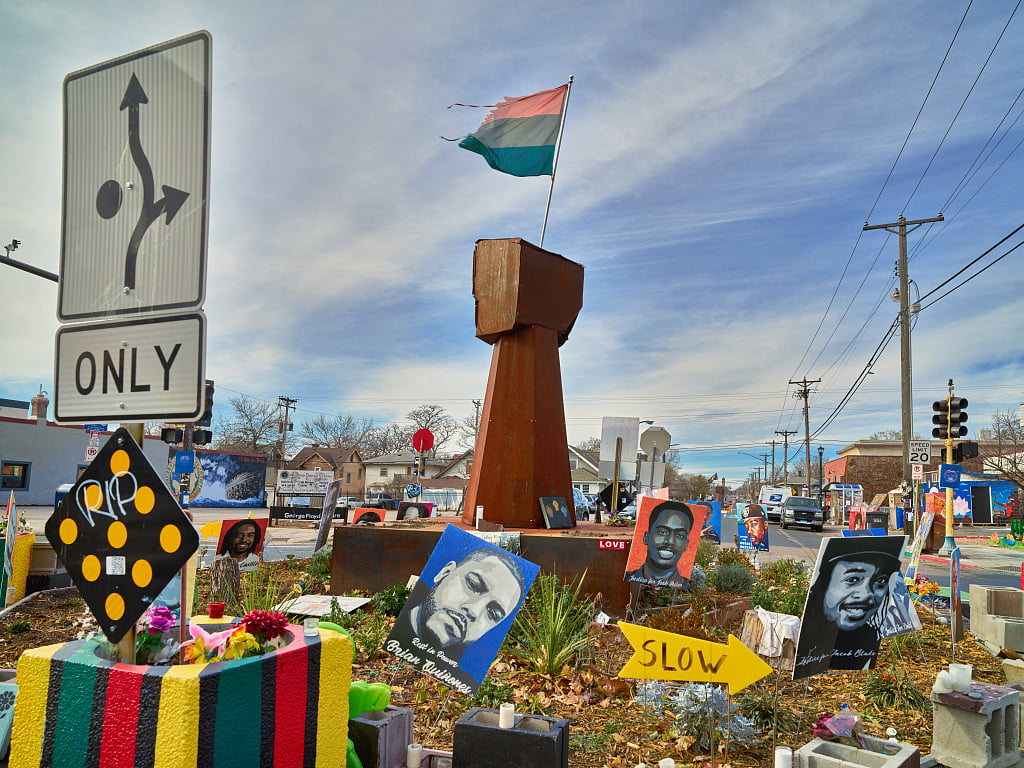
The memorial that grew at the site where Floyd died drew visitors from across the country. The sentence had been handed down. What it would mean for the thousands of future cases that lacked a nine-minute video and a watching world was the harder question left to answer.
1 claim
Not yet independently verified