Cases
Loading cases…
Loading cases…
2 casesclear filters
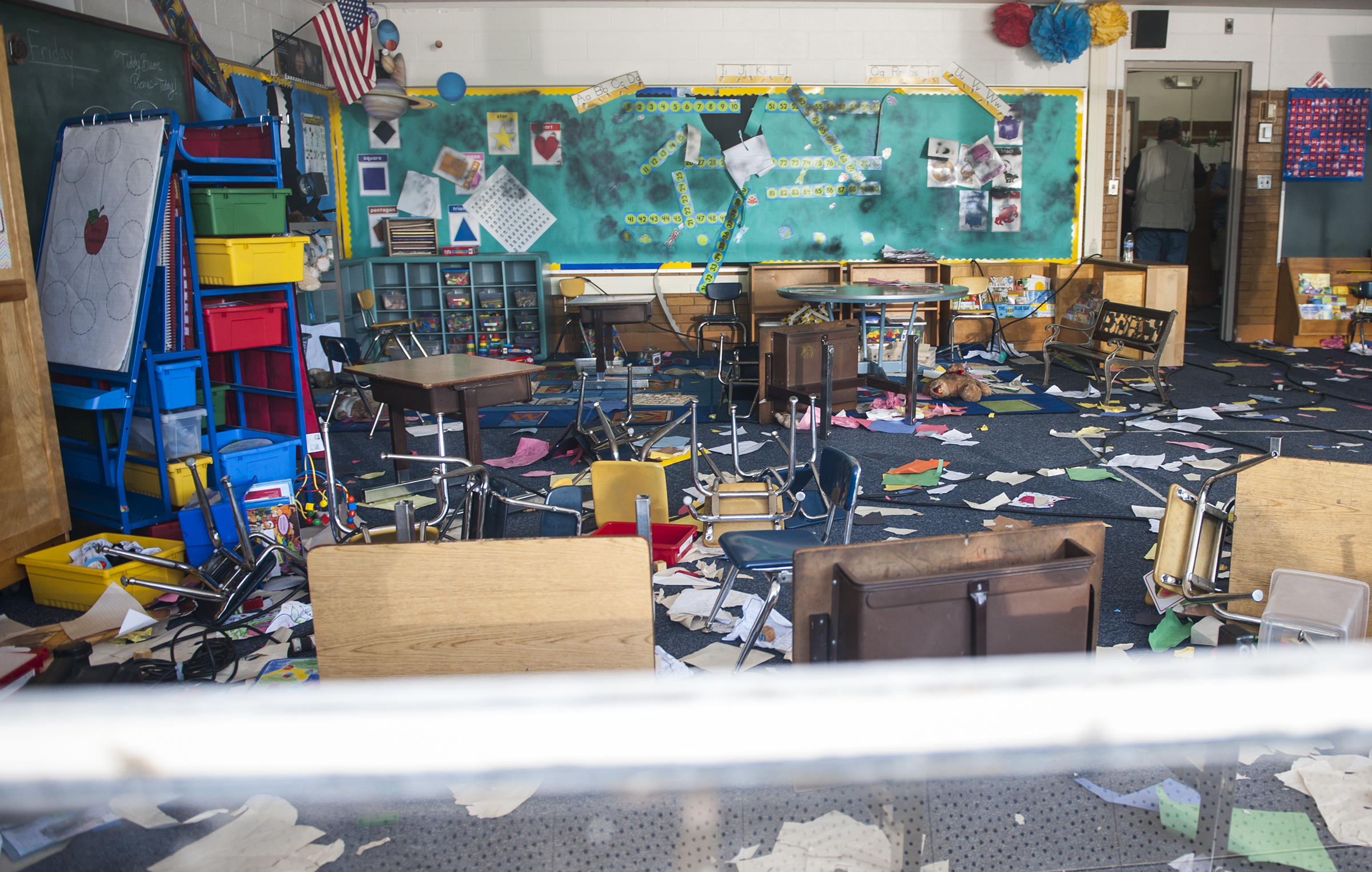
The Cokeville Elementary School bombing remains one of the most extraordinary survival stories in American school safety history. On May 16, 1986, David and Doris Young took 154 children and adults hostage at the elementary school in rural Cokeville, Wyoming. What unfolded over two and a half hours tested the limits of human courage and quick thinking—and resulted in a death toll of only two: the perpetrators themselves. David Young had served as Cokeville's town marshal in the 1970s but was dismissed after his six-month probationary period. He developed an elaborate personal philosophy he titled "Zero Equals Infinity" and conceived a ransom scheme he called "the Biggie"—targeting $2 million per hostage. He built a crude but devastating explosive device using a two-wheeled shopping cart, gasoline jugs, and an aluminum powder and flour mixture. His own teenage daughter, Princess Young, refused to participate in the plan and reported it to town hall authorities—but by then, it was already too late. At 1:00 PM on May 16, David and Doris Young arrived at the school. Two local men, Gerald Deppe and Doyle Mendenhall, were handcuffed outside but refused to enter. The couple then walked into the school and initiated the hostage-taking, holding 136 children and 18 adults captive in a single classroom. For nearly two and a half hours, the hostages endured increasingly desperate conditions. The Youngs had wired the room with their improvised bomb, built around the shopping cart explosive. The device was designed to ignite the gasoline and powder mixture, creating a devastating blast and fireball. The hostages faced not only the threat of the bomb but also the heat and suffocating fumes that built up as negotiations stalled. The critical turning point came through the calm, decisive action of a teacher who had already moved most of her students from the classroom to the gymnasium before the situation turned violent. When the bomb finally detonated at approximately 3:30 PM, the explosion tore through the classroom in a roar of flame and smoke. The blast itself was catastrophic to the room—but it was contained. Because of that earlier evacuation, 152 hostages were already out of harm's way. When emergency responders arrived, they found a scene of chaos and remarkable resilience. Of the 154 hostages, 79 sustained injuries—78 from bomb-related trauma and one from a gunshot wound that one of the perpetrators had fired. Miraculously, every single hostage survived. David and Doris Young were the only fatalities. The evacuation through the gymnasium became the stuff of school safety legend. The quick thinking that moved those children to safety transformed what could have been the deadliest school attack in American history into a story of survival against all odds. The failure of the bomb to fully detonate—attributed to a gasoline leak and faulty blasting caps—also contributed to the survival of the majority of hostages. Cokeville, a small ranching community of roughly 500 people then, was forever changed. Survivors and witnesses described years of psychological struggle, and the community's memory of that day remains both a testament to human resilience and a reminder of lasting trauma. The case became a landmark in school safety studies, influencing active-shooter and hostage crisis protocols nationwide. The legal outcome was straightforward: both perpetrators died in the blast, leaving no one to prosecute. The legacy of Cokeville endures not as a story of failure, but of survival—152 lives saved by a single teacher's calm in the face of disaster. It stands as one of the most compelling arguments for proactive emergency planning in schools, and a quiet reminder that even in the worst moments, human decision-making can rewrite the outcome.
On July 15, 2008, a grandmother's 911 call fractured the quiet of an Orlando summer and set off one of the most widely watched criminal investigations in American history. Cindy Anthony told the dispatcher she had not seen her two-year-old granddaughter, Caylee Marie Anthony, in thirty-one days. The call launched a cascade of revelations that would occupy courtrooms and news desks for the next three years. Caylee Marie Anthony had been born on August 9, 2005, to Casey Marie Anthony. The two lived with Casey's parents, George and Cindy Anthony, in a residential neighborhood in Orlando, Florida. By outward appearances, the household was an ordinary multigenerational family, with Caylee's grandparents deeply involved in her daily care. Photographs from her brief life showed an active, healthy toddler. What shattered that picture was the gap. According to investigators, Caylee had last been seen alive on June 23, 2008, when she was approximately two years old. Casey had not called police, had not filed a missing-child report, and had raised no alarm for more than a month. It was Cindy Anthony who finally dialed 911 on July 15, giving investigators their first awareness that something had gone badly wrong. The thirty-one days between Caylee's disappearance and that phone call would prove to be the most consequential period in the case — one that destroyed evidence and made the truth nearly impossible to prove in court. Investigators quickly discovered that Casey's account of events could not withstand scrutiny. She claimed a nanny had kidnapped Caylee — a story that was entirely fabricated. Cell phone records, credit card transactions, and witness accounts painted a portrait of Casey spending the weeks after Caylee disappeared attending parties and clubs, behavior that prosecutors would later characterize as consciousness of guilt. Every thread of her story unraveled under investigation, and by October 2008, Casey Anthony was formally charged with first-degree murder. The search for Caylee ended grimly on December 11, 2008, when investigators found her skeletal remains in a wooded area close to the Anthony family home. She had been placed in a laundry bag and wrapped in a blanket — a manner of concealment that suggested premeditation rather than accident. The advanced decomposition of the remains made determining an exact cause of death impossible, a forensic limitation that would define the trial to come. Casey Anthony's trial began in May 2011, drawing around-the-clock television coverage and intense public scrutiny. The prosecution argued that Casey had intentionally killed Caylee because the child was an obstacle to her lifestyle and freedom. The defense countered that Caylee had drowned accidentally in the family swimming pool and that Casey, panicked, had concealed the body out of fear rather than criminal intent. On July 5, 2011, the jury returned its verdict. Casey Anthony was found not guilty of first-degree murder, aggravated child abuse, and aggravated manslaughter of a child. She was convicted on four misdemeanor counts of providing false information to law enforcement — an acknowledgment that she had lied to investigators, but not proof that she had killed her daughter. The outcome shocked many observers who had followed years of coverage. The Casey Anthony case remains a reference point in American legal culture for the tension between moral outrage and the burden of proof. The prosecution could not escape a central problem: decomposed remains without a confirmed cause of death, a month-long gap that destroyed physical evidence, and a theory of the crime built largely on behavioral evidence rather than direct proof of how Caylee died. The four misdemeanor convictions confirmed that Casey had deliberately obstructed the investigation — fabricating a kidnapping story while her daughter's remains lay undiscovered in the Florida heat. Who killed Caylee Anthony, and how, remains officially undetermined. The thirty-one days between her disappearance and Cindy Anthony's 911 call on July 15, 2008, ensured that the full truth might never be provable in a court of law. That call, made too late, was the opening moment of a case that became a national reckoning with what American justice can and cannot do.
1 claim
Not yet independently verified
1 claim
Not yet independently verified