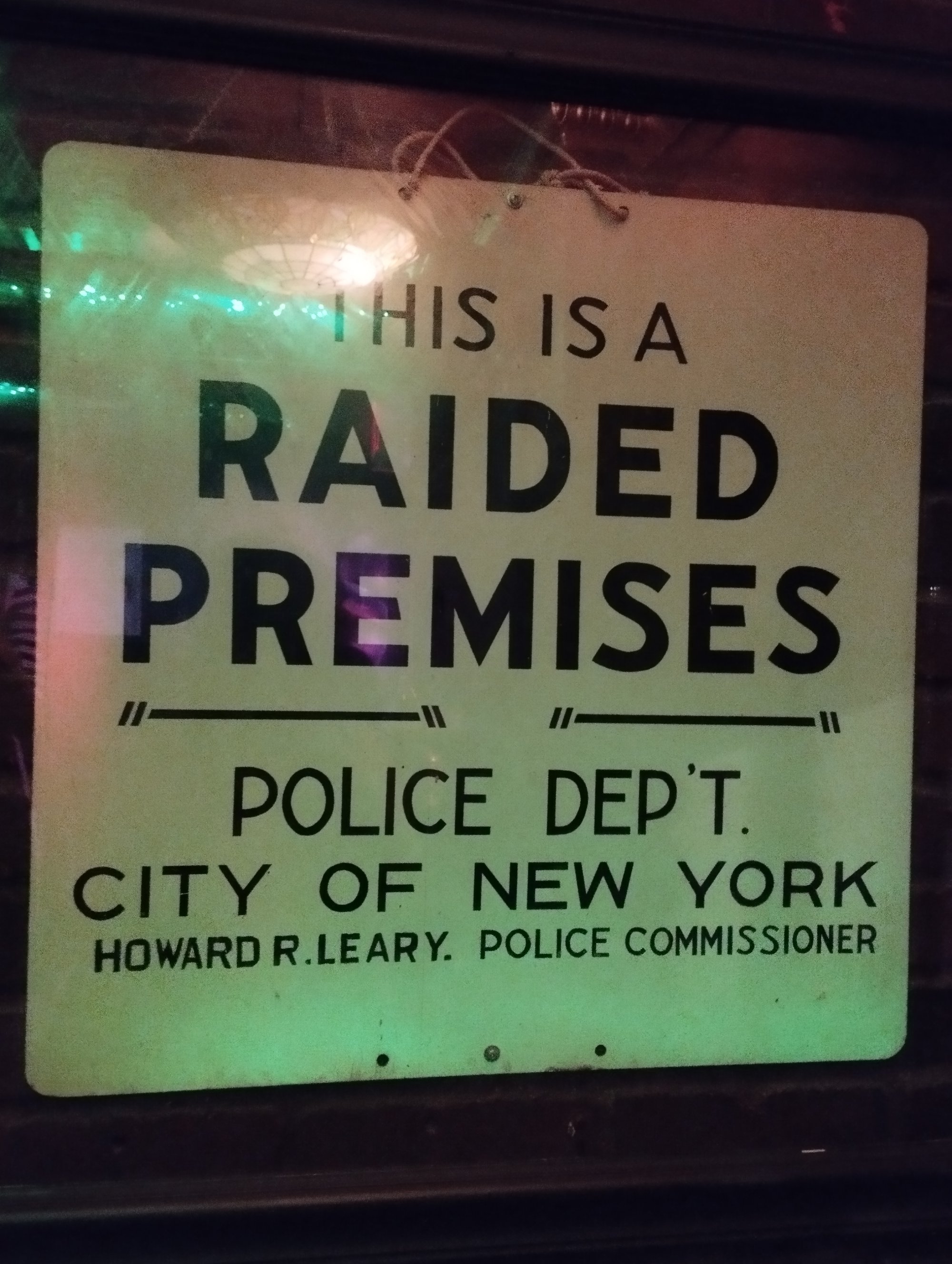
Just after 1 a.m. on June 28, 1969, officers from the New York City Police Department's Public Morals Section pushed through the doors of the Stonewall Inn at 53-57 Christopher Street in Greenwich Village. To the police, it was routine — a raid on a gay bar, a procedure they had run dozens of times across the city. To the people inside, it was one indignity too many.
The Stonewall Inn was a modest establishment — no running water behind the bar, a jukebox, a small dance floor — operated by the Genovese crime family since 1967. The venue had only been a gay bar since 1966, converted from a restaurant and boarding house. For many of its patrons — young people rejected by their families, transgender individuals with few alternatives — it was one of the only places in the city where they could exist without the immediate threat of arrest or violence.
Under the laws of the era, their presence was itself the offense. The American Psychiatric Association classified homosexuality as a mental disorder until 1973. Gay bars routinely lost their liquor licenses. Police used entrapment to arrest men simply for being there. Anyone wearing fewer than three pieces of gender-appropriate clothing could be taken in. Arrest records appeared in newspapers, destroying careers and families. The Mattachine Society, founded in 1950, and the Daughters of Bilitis, established in 1955, had advocated carefully and quietly for years — assimilationist strategies that drew minimal public attention. In 1965, activists had picketed the White House. The legal landscape had barely shifted.